
Magnesium
Label nameMagnesium (as glycinate, oxide, citrate or malate)
Also known asMg, Magnesium glycinate, Magnesium bisglycinate
Magnesium is an essential mineral involved in more than 300 enzyme systems, including energy production, muscle and nerve function, and protein synthesis. Many adults in the United States take in less than recommended from food.
Last reviewed November 19, 2026 by the Modern Genetix Editorial Team. Not medical advice.
The short answer
Magnesium is essential, and dietary surveys show many people fall short [1]. Systematic reviews suggest supplements may help subjective anxiety and sleep measures in people with low intake, while well-nourished athletes see little added benefit [2],[3],[4].
Quick facts
| Label name | Magnesium (as glycinate, oxide, citrate or malate) |
|---|---|
| Also known as | Mg, Magnesium glycinate, Magnesium bisglycinate |
| Category | Minerals & electrolytes |
| Role in formulas | Key active |
| Research tier | NutritionalAn established nutrient or food ingredient, described from nutrition references. |
| Found in | Calm Reserve, GLP Enhance, Daily Armor, Force Output |
| Amount per serving | Calm Reserve: 275 mg GLP Enhance: 200 mg Daily Armor: 50 mg Force Output: 60 mg |
What the research says
Magnesium appears in four formulas. Calm Reserve delivers 275 mg of elemental magnesium from 2,500 mg of magnesium glycinate, a gentle, well absorbed form. GLP Enhance provides 200 mg (oxide and citrate), Force Output 60 mg (malate) as an electrolyte, and Daily Armor 50 mg (oxide).
The NIH Office of Dietary Supplements sets the adult Recommended Dietary Allowance at 310 to 420 mg a day depending on age and sex, and notes that intakes below recommendations are common [1].
A 2017 systematic review found that magnesium supplementation may have a beneficial effect on subjective anxiety in anxiety-vulnerable groups, though study quality was poor [2]. A 2021 review of three trials in 151 older adults found people fell asleep about 17 minutes sooner with magnesium than with placebo, though the evidence quality was low [3]. A meta-analysis on muscle fitness found no clear benefit in athletes with good magnesium status, with possible benefits in people with low status [4].
Form matters for comfort. Magnesium glycinate is bound to the amino acid glycine and is often chosen for being gentle on the stomach, while magnesium oxide delivers more magnesium per milligram.
Evidence at a glance
| Source | Design | What it found |
|---|---|---|
| NIH ODS fact sheet | Evidence summary | Adult RDA 310 to 420 mg/day; low intakes common [1] |
| Boyle et al., 2017 | Systematic review | May help subjective anxiety in vulnerable groups; evidence quality poor [2] |
| Mah et al., 2021 | Systematic review and meta-analysis, older adults | Low-quality evidence for shorter time to fall asleep [3] |
| Wang et al., 2017 | Meta-analysis, 14 RCTs | No clear muscle benefit in magnesium-replete athletes [4] |
Studies vs label doses
The adult upper limit for supplemental magnesium is 350 mg a day; higher amounts can cause loose stools [1]. Calm Reserve provides 275 mg, GLP Enhance 200 mg, Force Output 60 mg and Daily Armor 50 mg per serving.
| Product | As listed on the label | Per serving |
|---|---|---|
| Calm Reserve | Magnesium (from 2,500 mg magnesium glycinate) | 275 mg |
| GLP Enhance | Magnesium (as magnesium oxide and magnesium citrate) | 200 mg |
| Daily Armor | Magnesium (as magnesium oxide) | 50 mg |
| Force Output | Magnesium (as magnesium malate) | 60 mg |
Where it appears
Magnesium is in 4 Modern Genetix formulas.
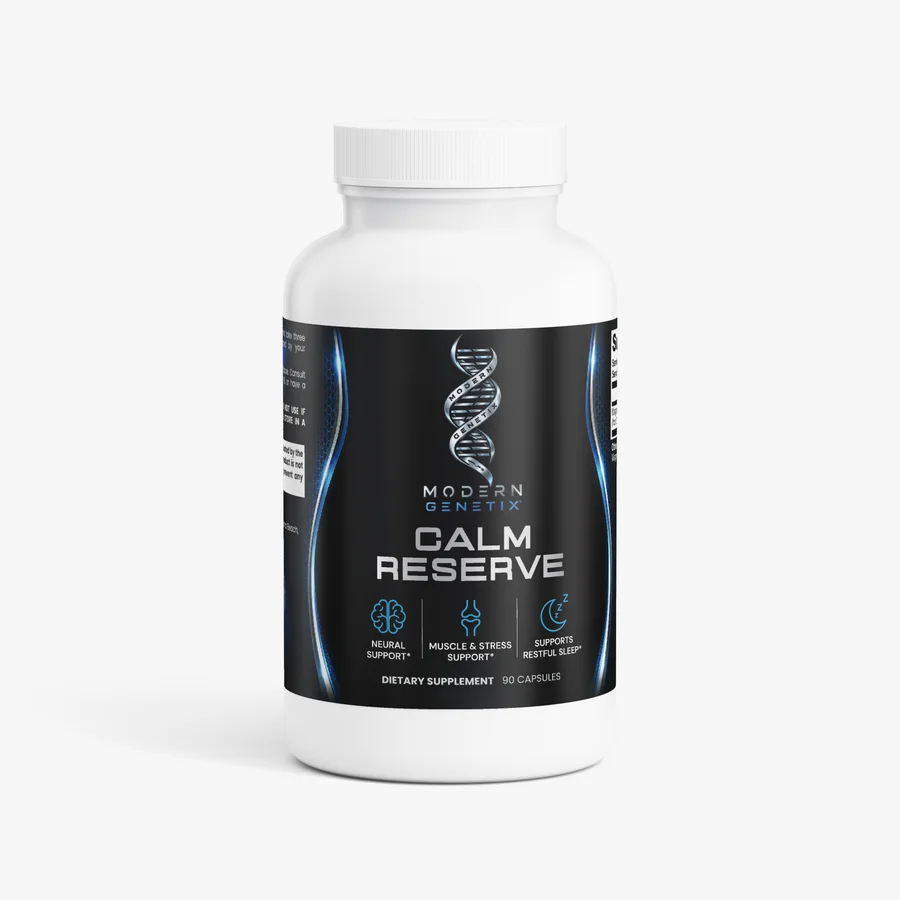 Capsules · RelaxationCalm ReserveMagnesium (from 2,500 mg magnesium glycinate): 275 mgSee the full formula
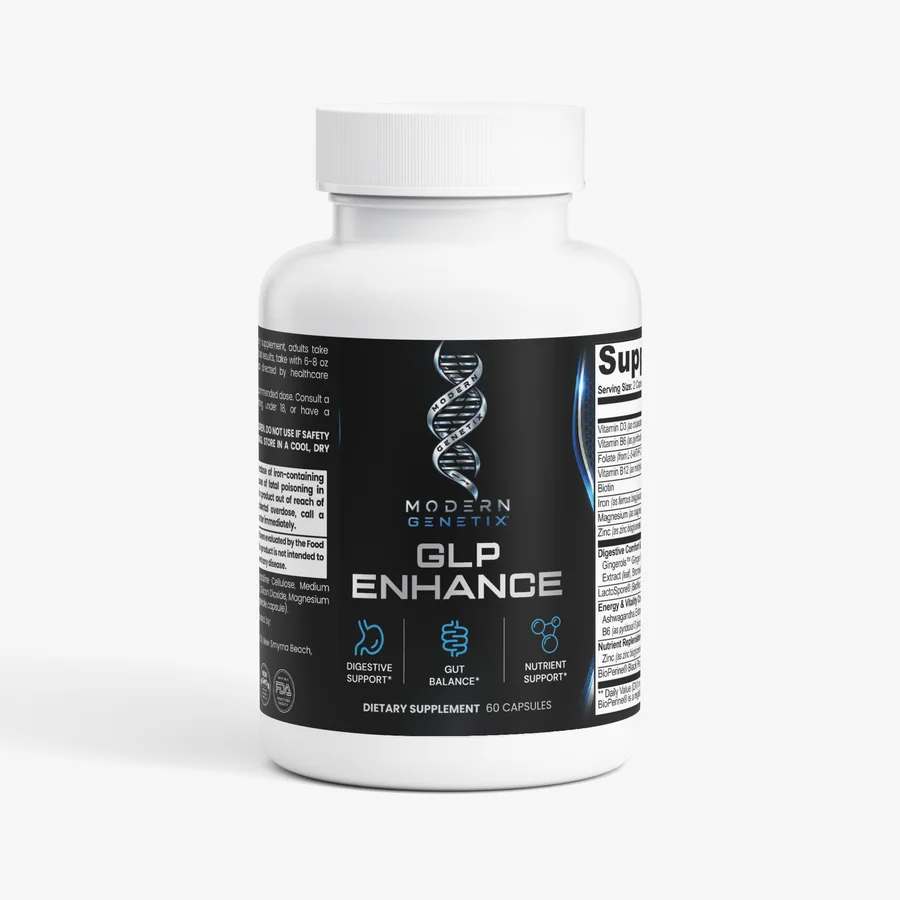 Capsules · Digestion and nutrient supportGLP EnhanceMagnesium (as magnesium oxide and magnesium citrate): 200 mgSee the full formula
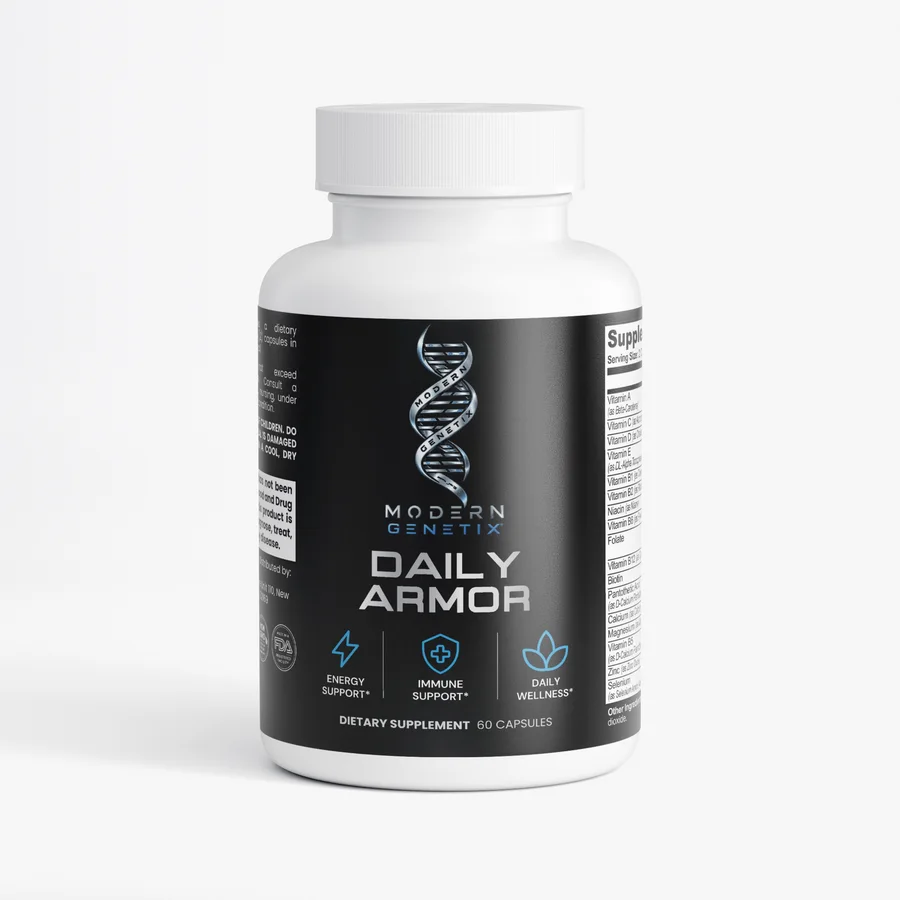 Capsules · Daily multivitaminDaily ArmorMagnesium (as magnesium oxide): 50 mgSee the full formula
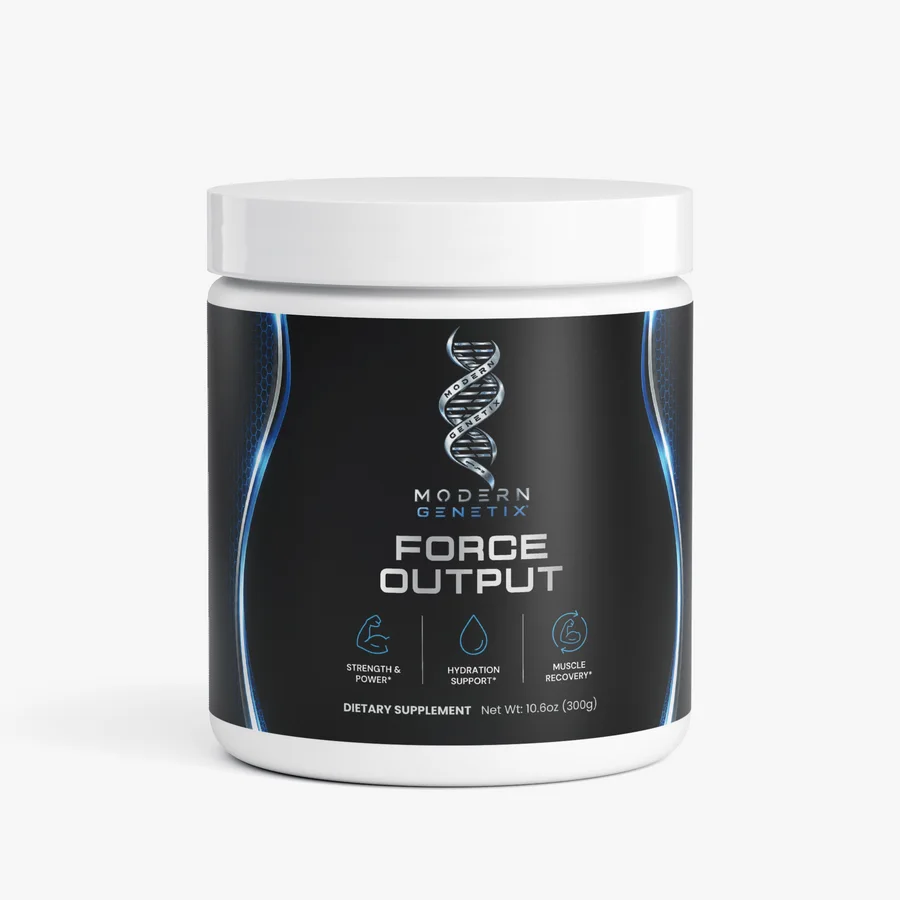 Powder · TrainingForce OutputMagnesium (as magnesium malate): 60 mgSee the full formula
Who it may suit, and who should ask first
May suit
- Adults whose diets are low in leafy greens, nuts, seeds and whole grains
- People who want an evening relaxation routine
- Active people replacing electrolytes
Ask a clinician first if you
- Have kidney problems
- Take antibiotics, bisphosphonates, diuretics or acid-reducing medicines
- Are pregnant or nursing
Safety
Too much supplemental magnesium can cause diarrhea and cramping. If you take more than one magnesium-containing product, add up the totals and stay within the 350 mg supplemental upper limit unless your clinician advises otherwise [1].
FAQ
Which Modern Genetix products contain magnesium?
Calm Reserve (275 mg as glycinate), GLP Enhance (200 mg), Force Output (60 mg) and Daily Armor (50 mg).
Why magnesium glycinate?
Glycinate is a chelated form that is often better tolerated by the stomach than some other forms, which suits a daily or evening routine.
Can I take Calm Reserve with GLP Enhance?
Together they provide 475 mg, which is above the 350 mg supplemental upper limit for adults [1]. Check with your clinician before combining them.
How strong is the research on Magnesium?
We rate it Nutritional. An established nutrient or food ingredient, described from nutrition references.
Bottom line
Magnesium is a foundational mineral that many diets lack. Modern Genetix uses the form that fits each job: glycinate for calm, malate for training and oxide or citrate inside multi-nutrient formulas.
Related ingredients

References
- NIH Office of Dietary Supplements. Magnesium - Health Professional Fact Sheet. ods.od.nih.gov/factsheets/Magnesium-HealthProfessional/
- Boyle et al. The Effects of Magnesium Supplementation on Subjective Anxiety and Stress-A Systematic Review. Nutrients. 2017. PubMed 28445426 · doi:10.3390/nu9050429
- Mah et al. Oral magnesium supplementation for insomnia in older adults: a Systematic Review & Meta-Analysis. BMC Complement Med Ther. 2021. PubMed 33865376 · doi:10.1186/s12906-021-03297-z
- Wang et al. The effect of magnesium supplementation on muscle fitness: a meta-analysis and systematic review. Magnes Res. 2017. PubMed 29637897 · doi:10.1684/mrh.2018.0430
Sources were checked by the Modern Genetix Editorial Team on November 19, 2026. Links open PubMed, the publisher DOI or NIH.