
Creatine Monohydrate
Label nameCreatine (as creatine monohydrate)
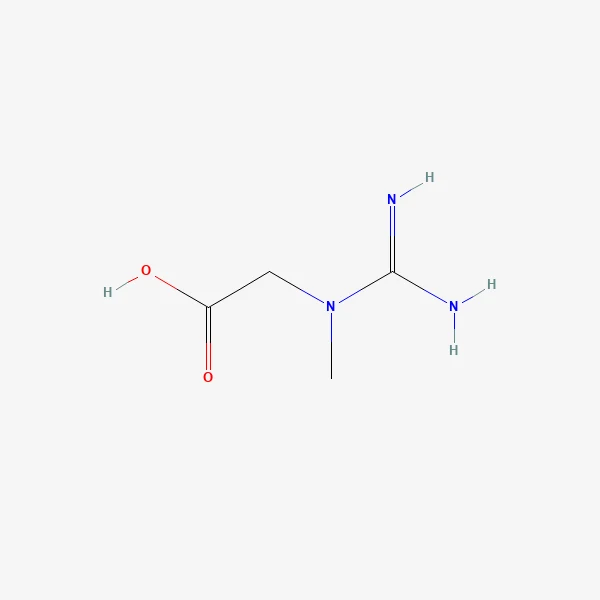
Also known asCreatine, Methylguanidinoacetic acid
Creatine is a compound your body makes from amino acids and stores mainly in muscle, where it helps recycle ATP, the cell's energy currency, during short, intense efforts. Meat and fish provide some creatine in the diet.
Last reviewed November 19, 2026 by the Modern Genetix Editorial Team. Not medical advice.
The short answer
Creatine monohydrate is one of the most researched sports supplements: it raises muscle creatine stores and improves high-intensity exercise performance and training adaptations [1]. A 2024 meta-analysis found creatine plus resistance training increased strength in adults under 50 [2].
Quick facts
| Label name | Creatine (as creatine monohydrate) |
|---|---|
| Also known as | Creatine, Methylguanidinoacetic acid |
| Category | Amino acids & compounds |
| Role in formulas | Key active |
| Research tier | ClinicalHuman clinical trials or systematic reviews of trials, or an NIH fact sheet summarizing them. |
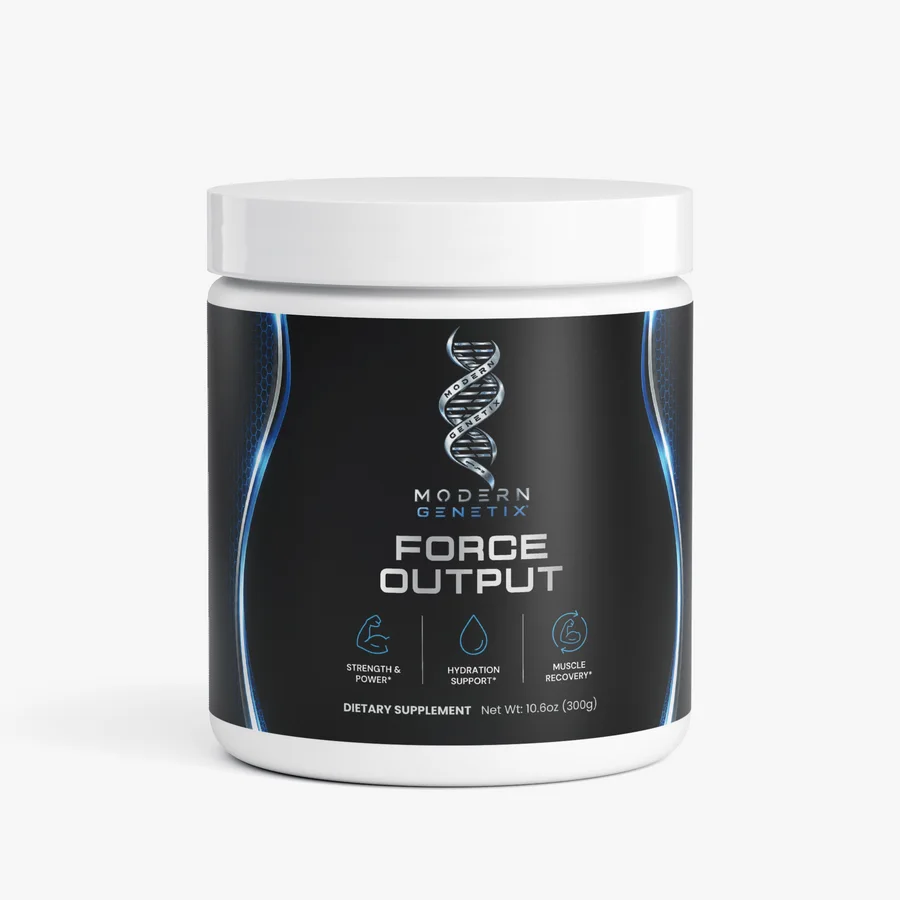
| Found in | Force Output |
| Amount per serving | Force Output: 5,000 mg |
| PubChem | CID 586 (Creatine) |
What the research says
Force Output delivers 5,000 mg of creatine monohydrate per 10 g scoop, combined with magnesium, sodium and potassium electrolytes, so creatine and hydration live in one daily drink.
The International Society of Sports Nutrition position stand concludes that creatine supplementation consistently increases muscle creatine concentrations, helping explain improvements in high-intensity exercise performance and training adaptations, and that short and long-term use is safe and well tolerated in healthy people [1].
A 2024 systematic review and meta-analysis found creatine combined with resistance training increased upper and lower-body strength in adults under 50, with clearer gains in men than women [2].
A meta-analysis of studies on kidney function concluded that creatine supplementation did not cause kidney damage at the amounts and durations studied [3].
Evidence at a glance
| Source | Design | What it found |
|---|---|---|
| Kreider et al., 2017 | Position stand | Raises muscle creatine; improves high-intensity performance; safe [1] |
| Wang et al., 2024 | Systematic review and meta-analysis | With resistance training, increased strength in adults under 50 [2] |
| de Souza E Silva et al., 2019 | Meta-analysis | No kidney damage at studied amounts and durations [3] |
| NIH ODS fact sheet | Evidence summary | Supports repeated high-intensity efforts [4] |
Studies vs label doses
Maintenance doses in research are commonly 3 to 5 g a day [1]. Force Output provides 5 g (5,000 mg) per scoop.
| Product | As listed on the label | Per serving |
|---|---|---|
| Force Output | Creatine (as creatine monohydrate) | 5,000 mg |
Where it appears
Creatine Monohydrate is in 1 Modern Genetix formula.
Who it may suit, and who should ask first
May suit
- Adults who lift, sprint or do high-intensity training
- Plant-based eaters, who get little creatine from food
Ask a clinician first if you
- Have kidney problems
- Take medicines that affect the kidneys
- Are under 18, pregnant or nursing
Safety
The ISSN position stand describes creatine monohydrate as safe and well tolerated in healthy people [1]. Mention that you take creatine if you have kidney blood tests.
FAQ
Which Modern Genetix products contain Creatine Monohydrate?
Force Output: 5,000 mg.
How much creatine is in Force Output?
5,000 mg of creatine monohydrate per 10 g scoop.
Do I need a loading phase?
No. A steady 3 to 5 g a day saturates muscle stores over a few weeks [1]. Follow the label directions.
Is creatine safe for kidneys?
In healthy people, meta-analyses show no kidney damage at studied doses [3].
How strong is the research on Creatine Monohydrate?
We rate it Clinical. Human clinical trials or systematic reviews of trials, or an NIH fact sheet summarizing them.
Bottom line
Creatine monohydrate is the gold standard of performance supplements. Force Output delivers a full 5 g with electrolytes in one scoop.
Related ingredients

References
- Kreider et al. International Society of Sports Nutrition position stand: safety and efficacy of creatine supplementation in exercise, sport, and medicine. J Int Soc Sports Nutr. 2017. PubMed 28615996 · doi:10.1186/s12970-017-0173-z
- Wang et al. Effects of Creatine Supplementation and Resistance Training on Muscle Strength Gains in Adults <50 Years of Age: A Systematic Review and Meta-Analysis. Nutrients. 2024. PubMed 39519498 · doi:10.3390/nu16213665
- de Souza E Silva et al. Effects of Creatine Supplementation on Renal Function: A Systematic Review and Meta-Analysis. J Ren Nutr. 2019. PubMed 31375416 · doi:10.1053/j.jrn.2019.05.004
- NIH Office of Dietary Supplements. Dietary Supplements for Exercise and Athletic Performance - Health Professional Fact Sheet. ods.od.nih.gov/factsheets/ExerciseAndAthleticPerformance-HealthProfessional/
Sources were checked by the Modern Genetix Editorial Team on November 19, 2026. Links open PubMed, the publisher DOI or NIH.