
Lactobacillus Probiotic Strains
Label nameL. acidophilus, L. salivarius, L. plantarum, L. rhamnosus, L. fermentum, L. reuteri, L. gasseri, L. paracasei
Also known asLactobacilli, Lactic acid bacteria, Lactiplantibacillus, Lacticaseibacillus, Limosilactobacillus (2020 names)
Lactobacillus strains are lactic acid bacteria found naturally in fermented foods and in the human gut. They are among the most studied probiotics, meaning live microorganisms that, in adequate amounts, offer a health benefit to the person taking them.
Last reviewed November 19, 2026 by the Modern Genetix Editorial Team. Not medical advice.
The short answer
Probiotics are defined as live microorganisms that confer a benefit when given in adequate amounts, and benefits are specific to the strain and dose [1],[2]. Research suggests probiotics can support digestive comfort and a balanced gut microbiome, though results differ between strains and products [3].
Quick facts
| Label name | L. acidophilus, L. salivarius, L. plantarum, L. rhamnosus, L. fermentum, L. reuteri, L. gasseri, L. paracasei |
|---|---|
| Also known as | Lactobacilli, Lactic acid bacteria, Lactiplantibacillus, Lacticaseibacillus, Limosilactobacillus (2020 names) |
| Category | Enzymes & probiotics |
| Role in formulas | Key active |
| Research tier | ClinicalHuman clinical trials or systematic reviews of trials, or an NIH fact sheet summarizing them. |
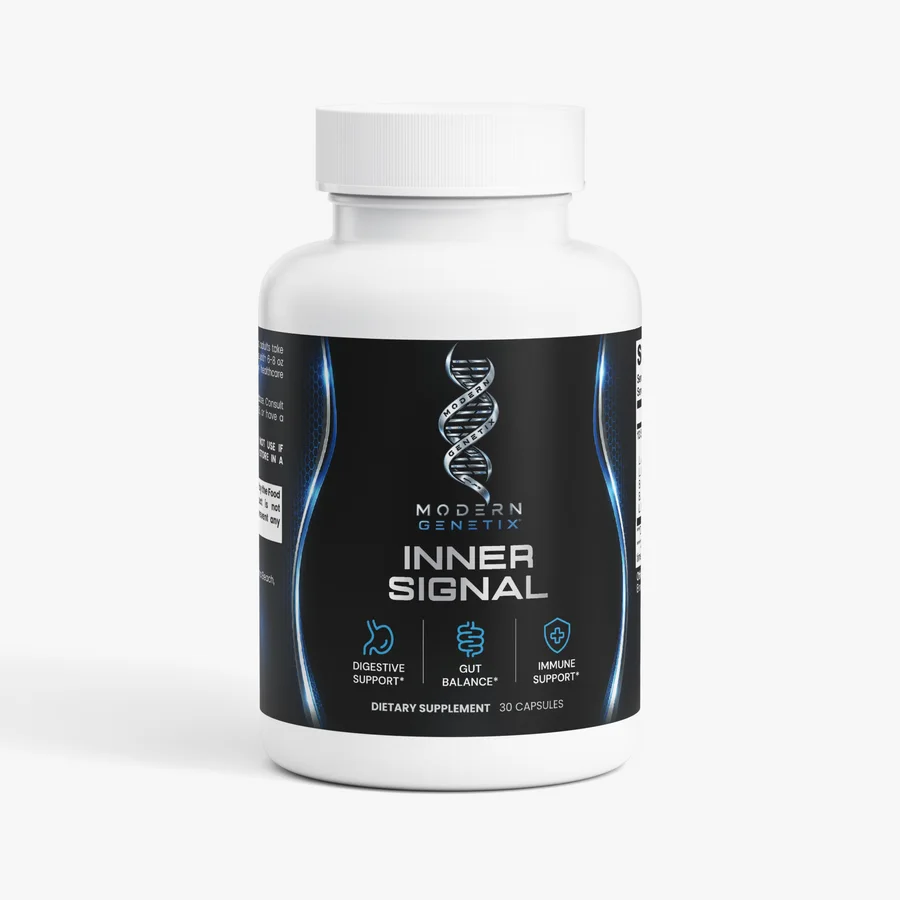
| Found in | Inner Signal |
| Amount per serving | Inner Signal: Part of 317 mg (20 billion CFU) blend |
What the research says
Inner Signal combines eight Lactobacillus-family strains with five Bifidobacterium strains in a 317 mg blend that provides 20 billion CFU per capsule at the time of manufacture. A multi-strain approach covers different species that live in different parts of the gut.
In 2014 an international expert panel set the widely used definition of a probiotic: live microorganisms that, when administered in adequate amounts, confer a health benefit on the host [1]. The panel stressed that effects depend on the specific strain and amount, which is why labels list strains and CFU counts.
In 2020, microbiologists reorganized the large Lactobacillus genus into 25 genera based on genetic data [4]. That is why you may see L. plantarum called Lactiplantibacillus plantarum, or L. rhamnosus called Lacticaseibacillus rhamnosus. The abbreviations on the Inner Signal label still refer to the same species.
The NIH Office of Dietary Supplements and NCCIH both summarize evidence that some probiotic strains can support digestive health, while noting that research is strain-specific and that not every product has been studied [2],[3]. Research suggests probiotics are a reasonable daily support for gut balance, not a quick fix.
Evidence at a glance
| Source | Design | What it found |
|---|---|---|
| Hill et al., 2014 | Expert consensus statement | Defined probiotics; benefits are strain and dose specific [1] |
| Zheng et al., 2020 | Taxonomic revision | Split Lactobacillus into 25 genera; species names updated [4] |
| NIH ODS fact sheet | Evidence summary | Some strains support digestive health; evidence is strain specific [2] |
Studies vs label doses
Probiotic studies use a wide range of doses, commonly from 1 billion to tens of billions of CFU a day [2]. Inner Signal provides 20 billion CFU per capsule (at manufacture) across 13 strains; individual strain counts are not listed.
Where this ingredient is part of a blend, the label gives the total blend weight but not the individual amount, so we do not estimate it.
| Product | As listed on the label | Per serving |
|---|---|---|
| Inner Signal | L. acidophilus, L. salivarius, L. plantarum, L. rhamnosus, L. fermentum, L. reuteri, L. gasseri, L. paracasei | Part of 317 mg (20 billion CFU) blend |
Where it appears
Lactobacillus Probiotic Strains is in 1 Modern Genetix formula.
Who it may suit, and who should ask first
May suit
- Adults who want daily digestive and gut-balance support
- People adding a probiotic to a balanced, fiber-rich diet
Ask a clinician first if you
- Have a weakened immune system or a serious illness
- Have a central line or are recovering from major surgery
- Are pregnant, nursing or under 18
Safety
Probiotics are generally well tolerated in healthy people; mild gas or bloating can occur in the first days. People with weakened immune systems have a small risk of infection and should ask a clinician first [3].
FAQ
Which Modern Genetix products contain Lactobacillus Probiotic Strains?
Inner Signal: Part of 317 mg (20 billion CFU) blend.
How many CFU are in Inner Signal?
20 billion CFU per capsule at the time of manufacture, from a 317 mg blend of 13 strains.
Why are some Lactobacillus names different now?
A 2020 reclassification split the genus into 25 genera, so some species have new genus names [4]. The species on the label are the same.
Do I need to refrigerate Inner Signal?
Follow the storage directions on the label: keep it in a cool, dry place.
How strong is the research on Lactobacillus Probiotic Strains?
We rate it Clinical. Human clinical trials or systematic reviews of trials, or an NIH fact sheet summarizing them.
Bottom line
Lactobacillus strains are the backbone of probiotic research. Inner Signal pairs eight of them with five Bifidobacterium strains for broad, daily gut support.
Related ingredients

References
- Hill et al. Expert consensus document. The International Scientific Association for Probiotics and Prebiotics consensus statement on the scope and appropriate use of the term probiotic. Nat Rev Gastroenterol Hepatol. 2014. PubMed 24912386 · doi:10.1038/nrgastro.2014.66
- NIH Office of Dietary Supplements. Probiotics - Health Professional Fact Sheet. ods.od.nih.gov/factsheets/Probiotics-HealthProfessional/
- National Center for Complementary and Integrative Health (NIH). Probiotics: Usefulness and Safety. www.nccih.nih.gov/health/probiotics-what-you-need-to-know
- Zheng et al. A taxonomic note on the genus Lactobacillus: Description of 23 novel genera, emended description of the genus Lactobacillus Beijerinck 1901, and union of Lactobacillaceae and Leuconostocaceae. Int J Syst Evol Microbiol. 2020. PubMed 32293557 · doi:10.1099/ijsem.0.004107
Sources were checked by the Modern Genetix Editorial Team on November 19, 2026. Links open PubMed, the publisher DOI or NIH.