
NMN (Nicotinamide Mononucleotide)
Label nameβ-Nicotinamide Mononucleotide
Also known asBeta-NMN, β-NMN, Nicotinamide mononucleotide
NMN is a naturally occurring molecule that the body converts into NAD+, a coenzyme every cell uses to turn food into energy. NAD+ levels tend to fall with age, which is why NMN has become one of the most studied healthy-aging ingredients.
Last reviewed November 19, 2026 by the Modern Genetix Editorial Team. Not medical advice.
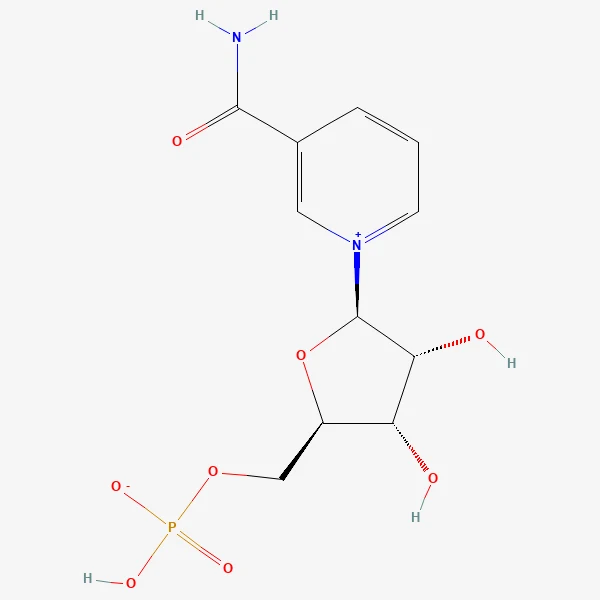
The short answer
Randomized trials in healthy adults show oral NMN raises blood NAD+ levels and is well tolerated at 250 to 900 mg a day [1],[2]. Early trials also report changes in walking endurance, aerobic capacity and muscle insulin sensitivity, though the studies are small and short [3],[4].
Quick facts
| Label name | β-Nicotinamide Mononucleotide |
|---|---|
| Also known as | Beta-NMN, β-NMN, Nicotinamide mononucleotide |
| Category | Amino acids & compounds |
| Role in formulas | Key active |
| Research tier | ClinicalHuman clinical trials or systematic reviews of trials, or an NIH fact sheet summarizing them. |
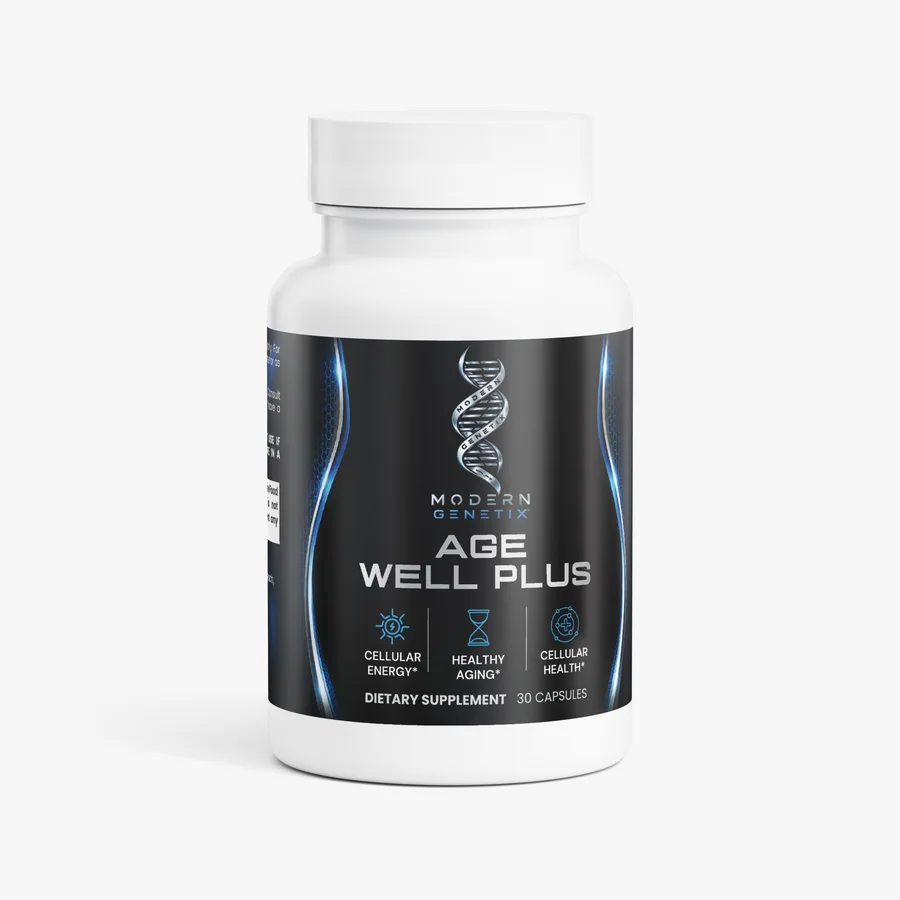
| Found in | Age Well Plus |
| Amount per serving | Age Well Plus: 500 mg |
| PubChem | CID 14180 (Nicotinamide mononucleotide) |
What the research says
Age Well Plus is a single-active formula: 500 mg of beta-nicotinamide mononucleotide per capsule, with a stated purity of 99.9%. Modern Genetix kept it to one active so the daily amount sits squarely inside the range used in human trials.
NMN sits one step upstream of NAD+ in the body's salvage pathway. In a 60-day randomized, double-blind trial in 80 healthy middle-aged adults, daily doses of 300, 600 and 900 mg raised blood NAD+ concentrations, with the highest levels at 600 and 900 mg, and six-minute walking distance improved in all NMN groups compared with placebo [1].
A 12-week trial using 250 mg a day in healthy middle-aged adults found NMN safely raised NAD+ metabolism and reported a possible improvement in arterial stiffness [2]. In amateur runners, six weeks of 300 to 1,200 mg a day alongside training improved measures of aerobic capacity [3]. A 10-week trial in postmenopausal women with prediabetes and overweight found 250 mg a day increased muscle insulin sensitivity [4].
These are promising, carefully designed studies, but they are small, short and often funded by industry. Research suggests NMN is a reliable way to raise NAD+ levels; whether that translates into long-term healthy-aging outcomes is still being studied.
Evidence at a glance
| Source | Design | What it found |
|---|---|---|
| Yi et al., 2023 | 60-day RCT, 80 healthy adults | 300 to 900 mg/day raised blood NAD+; walking distance improved [1] |
| Katayoshi et al., 2023 | 12-week RCT, 36 healthy adults | 250 mg/day raised NAD+ metabolism and was well tolerated [2] |
| Liao et al., 2021 | 6-week RCT, amateur runners | 300 to 1,200 mg/day improved aerobic capacity measures with training [3] |
| Yoshino et al., 2021 | 10-week RCT, women with prediabetes | 250 mg/day increased muscle insulin sensitivity [4] |
Studies vs label doses
Human trials used 250 to 1,200 mg a day, with blood NAD+ peaking at 600 to 900 mg in one dose-comparison trial [1],[3]. Age Well Plus provides 500 mg per capsule.
| Product | As listed on the label | Per serving |
|---|---|---|
| Age Well Plus | β-Nicotinamide Mononucleotide | 500 mg |
Where it appears
NMN (Nicotinamide Mononucleotide) is in 1 Modern Genetix formula.
Who it may suit, and who should ask first
May suit
- Adults interested in cellular energy and healthy-aging support
- People who want a single-ingredient NMN product at a studied amount
Ask a clinician first if you
- Are pregnant, nursing or under 18
- Have a medical condition or take prescription medicines
- Are under care for a serious illness
Safety
Trials of up to 12 weeks reported NMN as well tolerated with no serious adverse events [1],[2]. Long-term safety data in people are still limited.
FAQ
Which Modern Genetix products contain NMN?
Age Well Plus: 500 mg.
How much NMN is in Age Well Plus?
500 mg of beta-nicotinamide mononucleotide per capsule, one capsule a day, 30 capsules per bottle.
What is the difference between NMN and NAD+?
NMN is a precursor: your cells convert it into NAD+. Trials show oral NMN raises blood NAD+ levels [1].
How long do NMN studies last?
Most published human trials run 6 to 12 weeks [3],[2]. Longer studies are still needed.
How strong is the research on NMN?
We rate it Clinical. Human clinical trials or systematic reviews of trials, or an NIH fact sheet summarizing them.
Bottom line
NMN is one of the best studied NAD+ precursors, with human trials showing it raises NAD+ and is well tolerated. Age Well Plus delivers 500 mg, inside the studied range, with nothing else competing for the label.
Related ingredients
References
- Yi et al. The efficacy and safety of β-nicotinamide mononucleotide (NMN) supplementation in healthy middle-aged adults: a randomized, multicenter, double-blind, placebo-controlled, parallel-group, dose-dependent clinical trial. Geroscience. 2023. PubMed 36482258 · doi:10.1007/s11357-022-00705-1
- Katayoshi et al. Nicotinamide adenine dinucleotide metabolism and arterial stiffness after long-term nicotinamide mononucleotide supplementation: a randomized, double-blind, placebo-controlled trial. Sci Rep. 2023. PubMed 36797393 · doi:10.1038/s41598-023-29787-3
- Liao et al. Nicotinamide mononucleotide supplementation enhances aerobic capacity in amateur runners: a randomized, double-blind study. J Int Soc Sports Nutr. 2021. PubMed 34238308 · doi:10.1186/s12970-021-00442-4
- Yoshino et al. Nicotinamide mononucleotide increases muscle insulin sensitivity in prediabetic women. Science. 2021. PubMed 33888596 · doi:10.1126/science.abe9985
Sources were checked by the Modern Genetix Editorial Team on November 19, 2026. Links open PubMed, the publisher DOI or NIH.